The Cost of Standing Still: Why Renee’s $200,000 Wasn’t as Safe as She Thought
Navigating the Invisible Loss of Cash Savings vs Active Yield Strategy
When Renee’s marriage ended, she was left facing a future she had never planned for.
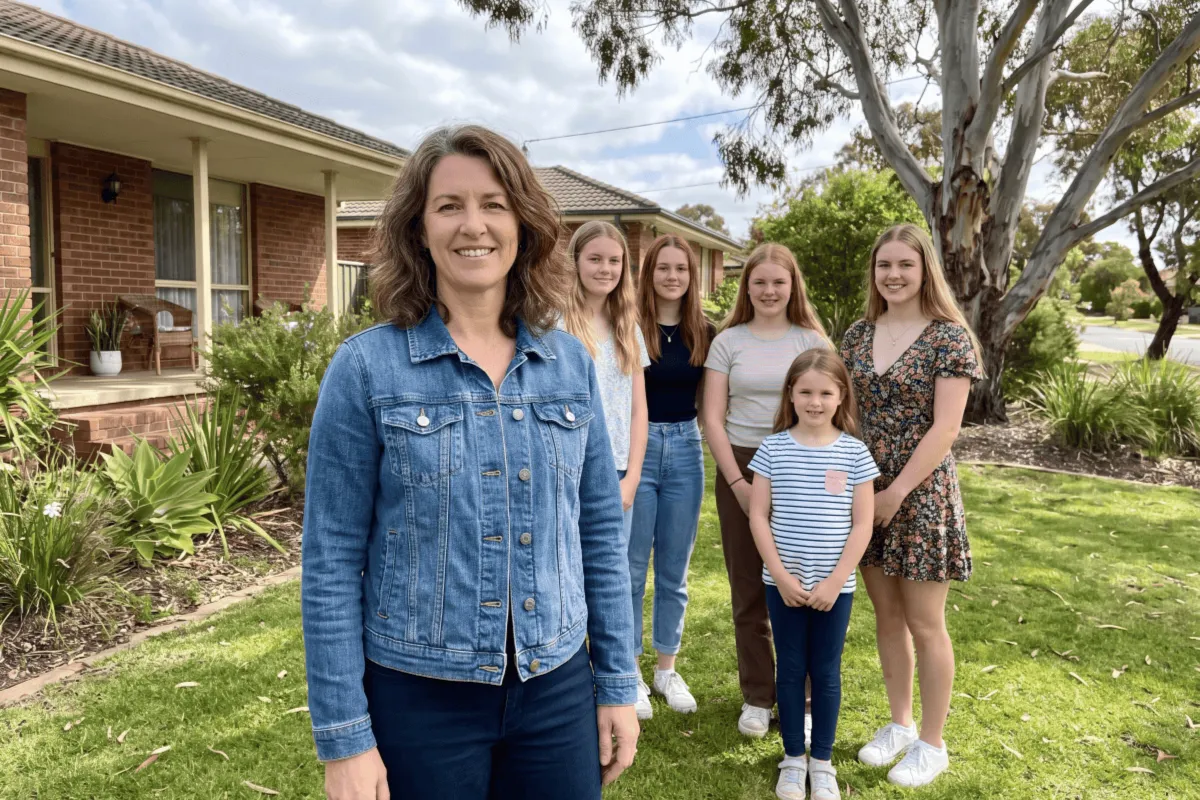
A single mum with five daughters, Renee had spent most of her adult life raising her family and caring for the home. Then the unthinkable happened—her husband left, and suddenly, the life she had known was gone.
The divorce was difficult, but the legal process allowed Renee to keep the family home—the place where her daughters had grown up and where so many of their memories had been made. She also walked away with $200,000 in cash.
For the first time in years, Renee had to think not only about how to support her family today, but how she would protect herself financially in the future.
Starting Again
While her $200,000 sat safely in the bank, Renee focused on rebuilding her working life.
She took over the running of a pizza shop, working late into the night and then returning to her responsibilities as a mum during the day. Life became an exhausting cycle of staff, suppliers, customers, school commitments and caring for five daughters.
There was barely enough time to sleep.
Renee knew the money from her divorce was important. It represented her financial security, her retirement and, hopefully, something she could one day leave behind for her daughters.
But she had no idea what her next move should be.
So, like many people, she left the money in the bank.
It felt safe.
An Investment Idea She Hadn’t Considered
Over time, Renee began noticing different investment opportunities appearing on Facebook.
Some were shares. Some were property developments. Others promoted villas in Bali offering double-digit returns.
The idea of investing in Bali caught her attention. She had always associated Bali with holidays—not with building an income-producing property portfolio.
Eventually, Renee attended an information night about investing in professionally operated hotels and resorts in Bali.
What she learned surprised her.
The presentation explained the difference between owning and managing an individual villa and investing in a fractional share of a larger hotel or resort business.
With a private villa, the investor may need to consider licensing, staffing, maintenance, marketing, bookings and ongoing management. A professionally operated hotel, however, could provide access to multiple revenue streams, experienced management and the broader performance of the resort.
To Renee, investing in a fraction of a hotel rather than taking responsibility for an entire villa made sense.
She booked a private session to understand the numbers in more detail. For the first time in years, she felt excited about what her money might make possible—for her retirement and for her five daughters.
Then life crept back in.
When Doubt Feels Like Safety
The more Renee thought about making a decision, the louder her doubts became.
What if I don’t understand it properly?
What if I make the wrong choice?
I’ve always been bad at maths.
The uncertainty became overwhelming, so Renee chose the option that felt safest: she kept her $200,000 in the bank.
But there was something she hadn’t understood.
Keeping her money in the bank wasn’t necessarily preserving its value. In real terms, it could mean barely moving forward at all.
The Hidden Cost of Cash
Let’s assume Renee’s savings account earned 4.5% per annum and inflation averaged 4% per annum over the next 20 years.
Her bank balance would increase substantially in dollar terms. However, once the effect of inflation was taken into account, its value would be equivalent to only around $220,000 in today’s purchasing power.
That means after 20 years, her real gain would be approximately $20,000—before considering tax on the interest or any changes in the bank’s savings rate.
The number on her bank statement would be higher, but the cost of housing, food, energy, healthcare and almost everything else would also have increased.
Renee’s money may have looked safe, but its purchasing power was barely growing.
What If Her Money Had Been Working Harder?
Now compare that with a hypothetical hotel investment.
If Renee had invested her $200,000 into a fractional hotel investment producing a guaranteed 10% annual return for the first five years, she would have received $20,000 per year—or $100,000 during that initial period.
If the return then increased to 15% in Year 6 and grew by 5% annually thereafter—rising from 15% to 15.75%, then 16.54% and continuing until Year 20—Renee would have received approximately $747,357 in total investment income over 20 years.
This calculation assumes the income was paid directly to Renee and was not reinvested or compounded. By Year 20 alone, the annual yield would have reached approximately 29.70%, producing around $59,398 in income for that year.
Two Very Different Outcomes
Under these assumptions, Renee is looking at two dramatically different financial outcomes.
If she keeps the money in the bank, earning 4.5% while inflation runs at 4%, her real financial gain after 20 years is approximately $20,000 before tax.
If she invests in the hotel scenario, she could receive approximately $747,357 in income over the same period, without reinvesting or compounding the returns.
That represents approximately 374% of her original $200,000 investment paid back to her as income.
The comparison isn’t between an investment with risk and an option with no risk.
It is between two different types of risk.
One carries investment, property, operating and market risks. The other carries inflation risk—the possibility that money left sitting in the bank gradually loses its ability to purchase the lifestyle, security and opportunities Renee hoped it would provide.
Renee’s story is not about criticising someone for keeping money in the bank.
Cash has an important role to play. It can provide an emergency fund, cover unexpected expenses and give a family valuable short-term security.
But holding a large amount of cash for decades without considering inflation can create a false sense of safety.
You don’t need to be brilliant at maths to become an informed investor. You need clear information, the confidence to ask questions and access to independent professionals who can explain the risks, structure and numbers in language you understand.
For Renee, the biggest obstacle wasn’t necessarily the investment itself.
It was the belief that she wasn’t financially capable enough to make a decision.
That belief could cost her far more than she realised—not only in potential income, but in the future she wanted to build for herself and her five daughters.
Sometimes, the greatest financial risk isn’t making the wrong move.
It is standing still while the value of your money quietly moves backwards.
If you would like to understand more about investing in professionally operated hotels and resorts in Bali, contact the Bali Property Investment team. We can help you explore the model and understand the numbers.
Got questions? Request a call back here and we'll be in touch.
This article contains hypothetical calculations based on stated assumptions and is provided for general educational purposes only. Future returns, inflation and interest rates may differ. The 10% return described is assumed to be contractually guaranteed for the first five years; later returns are illustrative and should not be interpreted as guaranteed. All investments involve risk. Seek independent financial, legal and taxation advice before making an investment decision.


