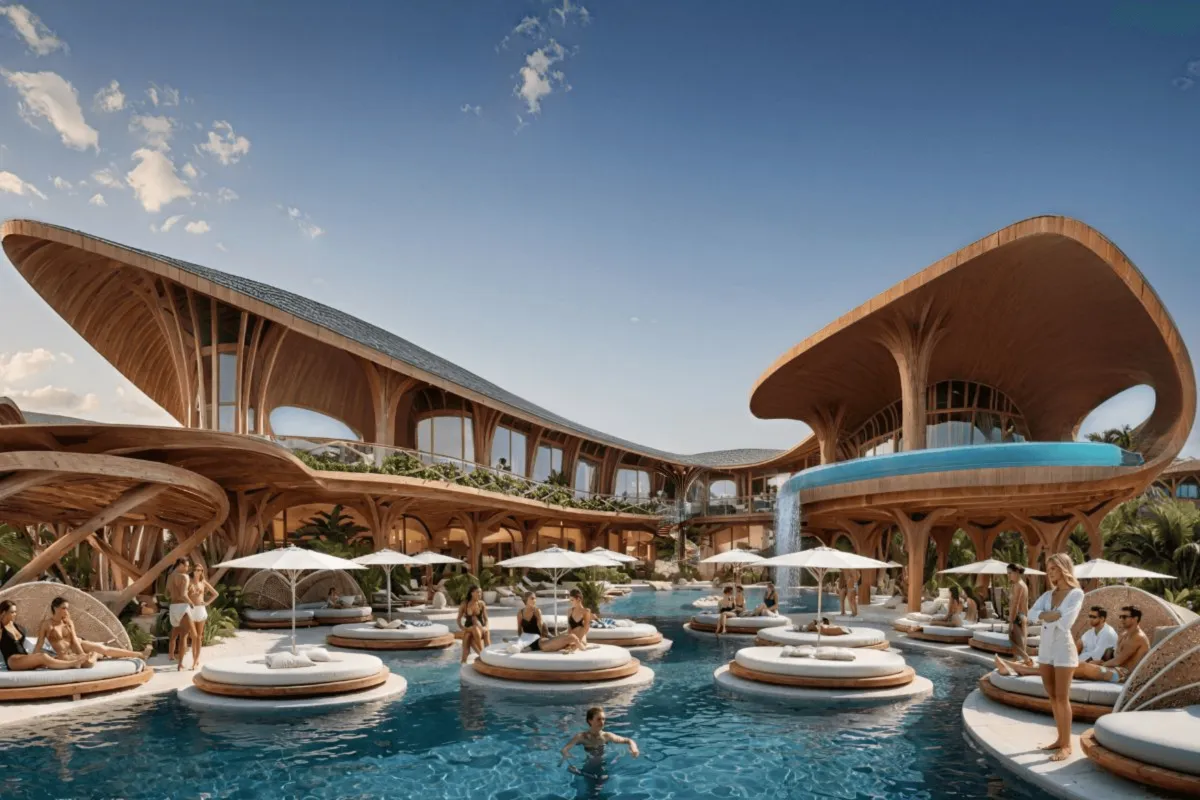
ELLE Resort PBG Progress: Inside Bali’s Approval Process
When people ask about the progress of the ELLE Resort & Beach Club, a common question is about permits and approvals. And it makes sense — for many Australian investors, the Bali development landscape can feel unfamiliar, and phrases like “PBG submission” can sound foreign.
What many don’t realise is that this early approvals stage is actually one of the most critical phases of the entire development journey. When it’s done properly, it lays the foundation for the project’s safety, structural integrity, long-term value and future operational success.
Just as in Australia, Bali follows a structured pathway of planning, feasibility, engineering assessments and regulatory compliance before any construction is permitted. The ELLE Resort & Beach Club is advancing through this stage with the support of one of the strongest consultant teams in Asia, alongside Colliers International, who are overseeing the development program, timelines and coordination across all parties.
Inside the Early Development Phase of ELLE Resort & Beach Club: How World-Class Resorts Are Engineered From the Ground Up
Before any construction begins on a resort of this scale, an enormous amount of work takes place behind the scenes.
For ELLE Resort & Beach Club in Seminyak, this preparatory phase is where the long-term value, safety and performance of the entire project are established.
Many investors hear terms like feasibility, design coordination or PBG submission and assume they’re simply administrative tasks. In reality, these steps form the backbone of a globally engineered, future-proof development.
Early Planning & Feasibility: Establishing the Vision and Viability
Every major development begins with feasibility studies and site assessments — the process that tests whether the land, the concept and the surrounding environment are aligned.
In Seminyak, one of Bali’s most dynamic and complex coastal zones, this phase includes analysis of:
Zoning and land-use regulations
Height limits and coastal restrictions
Environmental and soil conditions
Setbacks and building boundaries
Cultural and community considerations
Long-term regional planning
For the ELLE Resort & Beach Club, this early work created a solid foundation for a resort designed not only to meet regulations, but to perform at a luxury standard for decades.
As Mark Reed explains:
“The planning stage is where the entire project takes shape. Safety, certainty and structure are engineered from the beginning. Nothing at this stage is improvised.”
Assembling the Expert Team Behind the ELLE Resort
Once feasibility is confirmed, the next step is bringing together the technical specialists who will shape the resort.
A development of this scale is never designed by one architect — it is created through a network of experts working in coordinated precision.
The consultant team includes:
Architects
Structural Engineers
MEP Engineers (mechanical, electrical, plumbing, fire safety)
Landscape Architects
Interior Designers
Geotechnical Engineers
PBG (permit) Consultants
Oversight of this multi-disciplinary team is led by Colliers International, who manage timelines, track deliverables, align consultant outputs and ensure every component progresses seamlessly toward PBG submission.
Their role is mission-critical.
Without this coordination, disciplines can drift out of alignment — which leads to delays, redesign costs and approval setbacks. Colliers ensures the entire process remains structured, compliant and cohesive.
From Ground Conditions to Guest Experience: Engineering That Starts Below the Surface
One of the most important early steps is understanding the land itself.
Geotechnical surveys examine:
Soil structure and layering
Sand composition
Depth of the water table
Ground stability
Load-bearing capacity
In Seminyak’s coastal zones — where sandy soils and higher water tables are typical — this information is essential to designing safe, enduring foundations.
Geotechnical data influences far more than structural engineering. It shapes:
Material selections
Corrosion prevention systems
Waterproofing strategies
Long-term maintenance planning
How the building performs over its lifetime
At the same time, the operational flow of the hotel is being designed.
The guest experience at a luxury resort is built on what visitors don’t see:
Back-of-house logistics
Kitchen and service routes
Laundry and housekeeping flow
Waste management pathways
Staff circulation and support spaces
These systems must be integrated early because they directly influence architectural layouts, corridor placement, wall positioning and lift locations.
As Reed notes:
“This is the most future-focused part of the journey. When you design for longevity, profitability and sustainability, you are protecting the investment long before construction begins.”
Coordinated Design Development: Aligning Every Drawing, System & Detail
After the ground and operational requirements are clear, the architects and engineers begin developing detailed coordinated drawings, including:
Architectural layouts
Structural systems
Mechanical, electrical and plumbing engineering
Fire and life safety systems
Water and waste management
Landscape integration
Colliers ensures all documentation is aligned — the structural beams meet the architectural grid, mechanical ducts fit above ceilings, drainage follows the natural site slope, and every system functions cohesively.
This alignment makes construction more efficient and strengthens the PBG submission, which is the formal approval required before building can commence.
Preparing the PBG Submission: The Official Gateway to Construction
The PBG package brings together every technical, environmental and structural component of the project. This includes:
Architectural drawings
Structural engineering
Geotechnical data
MEP and fire safety systems
Environmental and drainage plans
Compliance documentation
The PBG consultant ensures all documents meet regulatory standards and accurately reflect Indonesian building requirements. Their industry knowledge helps streamline the process and anticipate common approval issues.
Timeline Toward PBG Submission
Based on industry best practice and the strategic development path for ELLE Resort & Beach Club, the timeline is structured as follows:
Q3–Q4 2025
Design development begins
Geotechnical surveys completed
Cross-discipline coordination underway
Q1–Q2 2026
Full architectural, structural and MEP coordination
Fire safety and life systems finalised
Operational planning reviewed
Q2 2026
PBG submission filed with authorities
During this time, site preparations progress in parallel.
For ELLE Resort & Beach Club, demolition and ground clearing are scheduled to be completed prior to PBG submission — ensuring construction can begin immediately upon approval.
After the PBG is lodged, the project enters the contractor tender phase. Qualified builders review documentation, submit pricing proposals and plan construction logistics. This means that once approval is granted, building can begin without delay.
Permit Ready, Investor Ready: Engineering a Resort That Lasts for Decades
Permits and approvals are far more than bureaucratic steps.
They reflect the integrity, intelligence and discipline of a project.
When done correctly, they create:
A safe and durable structure
A streamlined construction program
Strong operational performance
Long-term value and investment stability
For the ELLE Resort & Beach Club, this phase is where the resort’s future is protected.
It is where compliance is achieved, safety is engineered and the guest experience is architected from the inside out.
Most importantly, it is where the foundations — literal and strategic — are laid for a resort designed to perform at international standards for generations.
Discover money management investment secrets and more information on the ins and outs of Bali property investment by accessing our educational video content.
Head to our main website to get started: balipropertyinvestment.com.au